Why I Wrote Dark Recipe: Food, Code, and the Fragility We Don’t Want to See
On December 20, 2025, I published Dark Recipe, a thriller about food, technology, and the systems that quietly hold modern life together—until they don’t.
On the surface, it’s a story about a weaponized indoor farming platform, a biotoxin no one is looking for, and an engineer, Knox Ramsey, who builds a system to feed people and ends up watching that same system turned against the world. Underneath the plot, though, is something more personal: my unease with how blindly we trust the infrastructure behind our food, and how casually we outsource that trust to software.
In the book, there’s a line I coined and kept coming back to as I wrote:
Trust physics, not software.
That sentence is the backbone of Dark Recipe, and it grew directly out of my own experience building agricultural automation systems, overseeing food safety, and studying how food catastrophes have unfolded in the past.
A Lesson from History: The Great Chinese Famine
One of the earliest seeds for Dark Recipe was planted when I began reading about the Great Chinese Famine of 1959–1961.
Tens of millions of people died, not solely because there was no food, but because a political system refused to see reality. Local officials inflated grain yields to look good. False numbers rolled up the chain, and policies based on those lies stripped food out of the countryside. On paper, the harvests were great. In the villages, people starved.
What struck me wasn’t just the scale of suffering, but the mechanism: bad data, believed by powerful people, amplified by a rigid system.
It was a man‑made disaster, built on false confidence in a model of the world that no longer matched reality.
Fast‑forward to today. China is now the world’s largest importer of food and is haunted by the memory of famine, yet it is still structurally vulnerable to disruptions. Meanwhile, in the U.S. and much of the developed world, we’ve grown almost numb about food. If it has a label, a QR code, a “certified” seal, we assume it has passed through a gauntlet of testing and is therefore safe.
That tension—between historical trauma over food insecurity and modern complacency about food safety—was one of the sparks behind Dark Recipe. In the book’s geopolitical backdrop, China quietly exploits vulnerabilities in the American food system as part of its long game toward food independence. But the real target, for me, was not a particular country. It was our shared, dangerous comfort with the idea that “someone else is watching this, so I don’t have to.”
REAP and Agrolytics: When Fiction Starts as a Real System
Before Knox Ramsey ever walked onto the page, I founded a startup called Agrolytics.
At Agrolytics, I designed and built an indoor farming system called REAP:
Recipe‑based Ecosystem for Agricultural Processes.
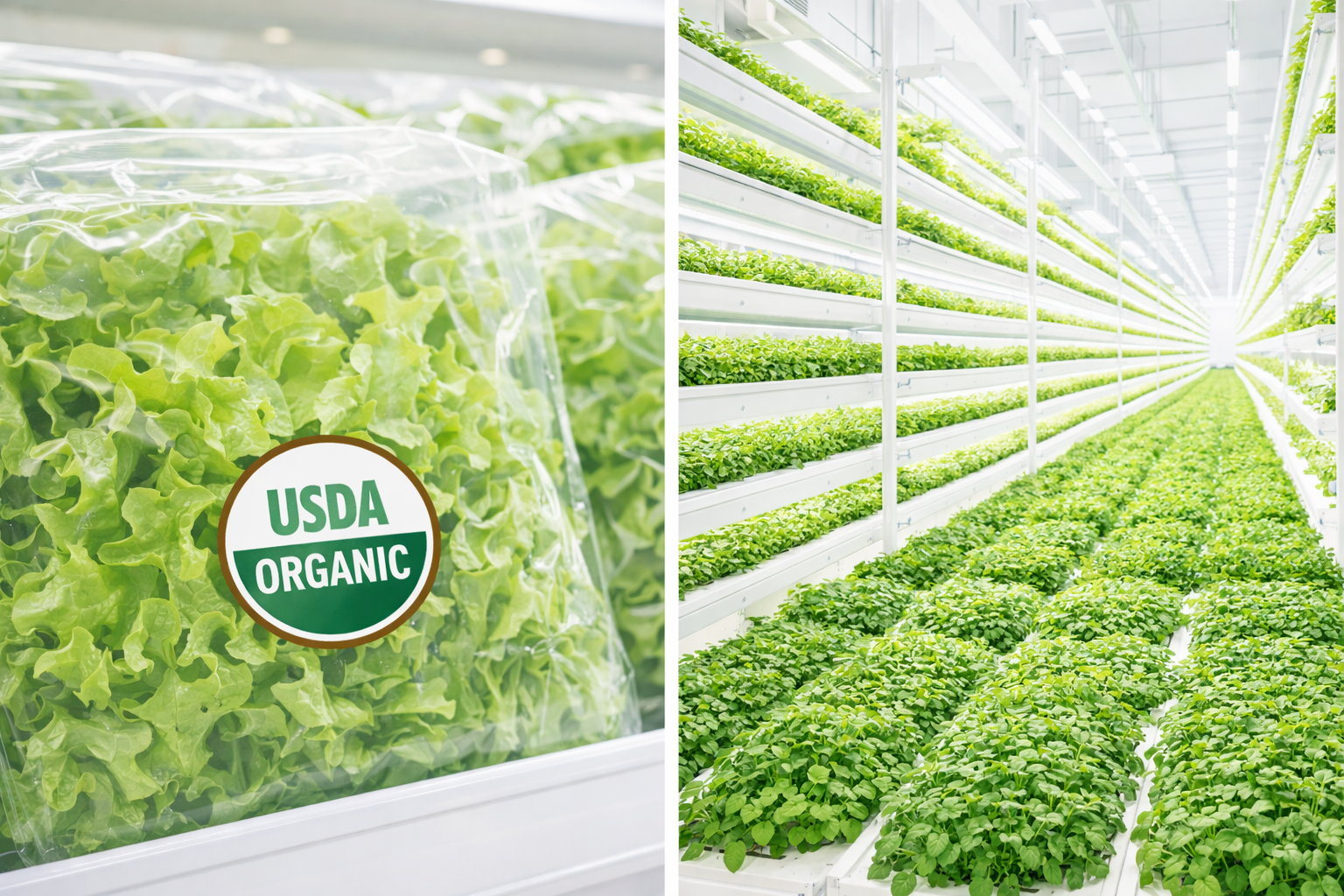
REAP was meant to be a flexible, highly automated platform for controlled‑environment agriculture—vertical farms, indoor cannabis, greenhouses. The vision was ambitious but straightforward:
-
Industrial PLC backbone
Use rugged, industrial‑grade PLCs (programmable logic controllers) as the core control layer. These are the workhorses of factories and process plants, designed to run reliably for decades. -
Massive sensor network
Deploy dense arrays of sensors—temperature, humidity, CO₂, light, pH, EC, flow, pressure, imaging systems for plant health, and more—across the entire grow environment. -
Cloud‑based data lake
Stream all of that data to a cloud‑hosted data lake. Store everything: every setpoint, every reading, every alarm, every image. -
ML/AI “recipes” for growth
Use machine learning and AI to analyze that ocean of data and continuously refine “recipes” for plant growth: heat, light, nutrient feedstocks, photoperiods, irrigation timing, airflow, imaging feedback, efficient use of water, and resource optimization.
In short: grow anything, anywhere, anytime of the year, by closing the loop between physics (what’s happening in the environment), biology (how the plants respond), and software (how we adjust the controls).
If you’ve read Dark Recipe, you’ll recognize this architecture. That’s by design. The system at the heart of the novel isn’t a sci‑fi fantasy—it’s a thinly veiled version of what we were actually building.
When you’ve spent years designing these systems, you eventually ask yourself a different question:
What happens if someone points all this power the wrong way?
Molly’s Grape & Citrus: Food Safety in the Real World
Today, I serve as the CTO and COO of Molly’s Grape & Citrus Company. Among other responsibilities, I have oversight of food safety, including compliance with FSMA Rule 204 and the Food Traceability List requirements.
That means I spend a lot of time thinking about:
- Where every lot of product came from
- How it moved through the supply chain
- What records exist (or don’t) at each handoff
- How fast we can trace, respond, and recall if something goes wrong
From the outside, that can sound dry. On the inside, you realize how much of modern life depends on these invisible processes working correctly—and how often they’re held together by a mix of good intentions, aging infrastructure, and software we barely understand anymore.
When you combine that reality with the optimism of the indoor farming world—“data‑driven,” “automated,” “secure”—you get a dangerous kind of comfort. We have sensors. We have logs. We have dashboards. Therefore, we must have control.
That assumption is what Dark Recipe attacks.
Our Blind Faith in Labels and Code
Most of us, most of the time, don’t think about where our food came from. We see a sticker, a brand name, a batch code, maybe a marketing claim about sustainability or testing, and we move on.
If it’s labeled, if a system tracked it, we assume it must be safe.
In Dark Recipe, I wanted to push hard against that blind faith. Not as an alarmist or someone preaching from a soapbox, but as someone who has actually sat in the control rooms, written the logic, and watched these systems run.
The biotoxins in the book are not exotic military agents. They are produced by the plants themselves—defense chemicals and stress responses nudged into dangerous territory by a manipulated growing environment. The twist is that these compounds:
- Are not part of routine testing panels
- Are not easily visible in a warehouse or a loading dock
- Can slip through systems that have been optimized for efficiency, yield, and standard hazards—but not for something that “shouldn’t be there” in the first place
In other words, the threat comes from within the biology, triggered by subtle changes in physics and chemistry that the software either misses, misinterprets, or actively hides.
Which brings me back to that line:
Trust physics, not software.
Software can lie. Databases can be corrupted. Dashboards can show you green lights while the real world is burning. Physics doesn’t care. If the plant is stressed, if the chemistry is off, if the environment is wrong, reality will eventually show up—often in the emergency room.
Systems, Squabbles, and the Human Factor
The rest of the story in Dark Recipe is built around very human failures that sit on top of these technical systems:
-
Interdepartmental squabbling
Agencies and organizations that should cooperate instead protect their turf. Data is siloed. Warnings are ignored. No one wants to be the first to say, “We don’t know what this is.” -
Unprepared trauma centers
Level I and II trauma centers are incredibly capable at handling car crashes, shootings, and familiar mass casualty patterns. But a distributed, chemically mediated event that looks like “food poisoning” at first? That stretches protocols and overwhelms capacity in ways we don’t like to imagine. -
A family story at the core
Knox Ramsey is not a villain. He’s an engineer who built a system to help people. Like Oppenheimer, he lives with the knowledge that his creation has been twisted into something he never intended. That moral weight—“I built this, and now people are dying because of it”—is as central to the book as any geopolitical maneuver.
I didn’t write Dark Recipe to lecture anyone about what they should eat or how they should live. I wrote it to make readers a little less complacent about the systems we all depend on, and a little more skeptical of the idea that software will save us from ourselves.
If the book leaves you with one lingering thought, I hope it’s this:
When it comes to food, safety, and the infrastructure that keeps us alive, don’t just trust the label or the screen.
Trust physics, not software.
Comments