Getting Terms & Conditions Ready to Publish
As I prepare the second Knox Ramsey novel for publication, I am learning how editing, peer review, and trusting my own voice make the work better.
I just watched the Detroit Lions win an overtime nail-biter. The heart-attack cats are back.
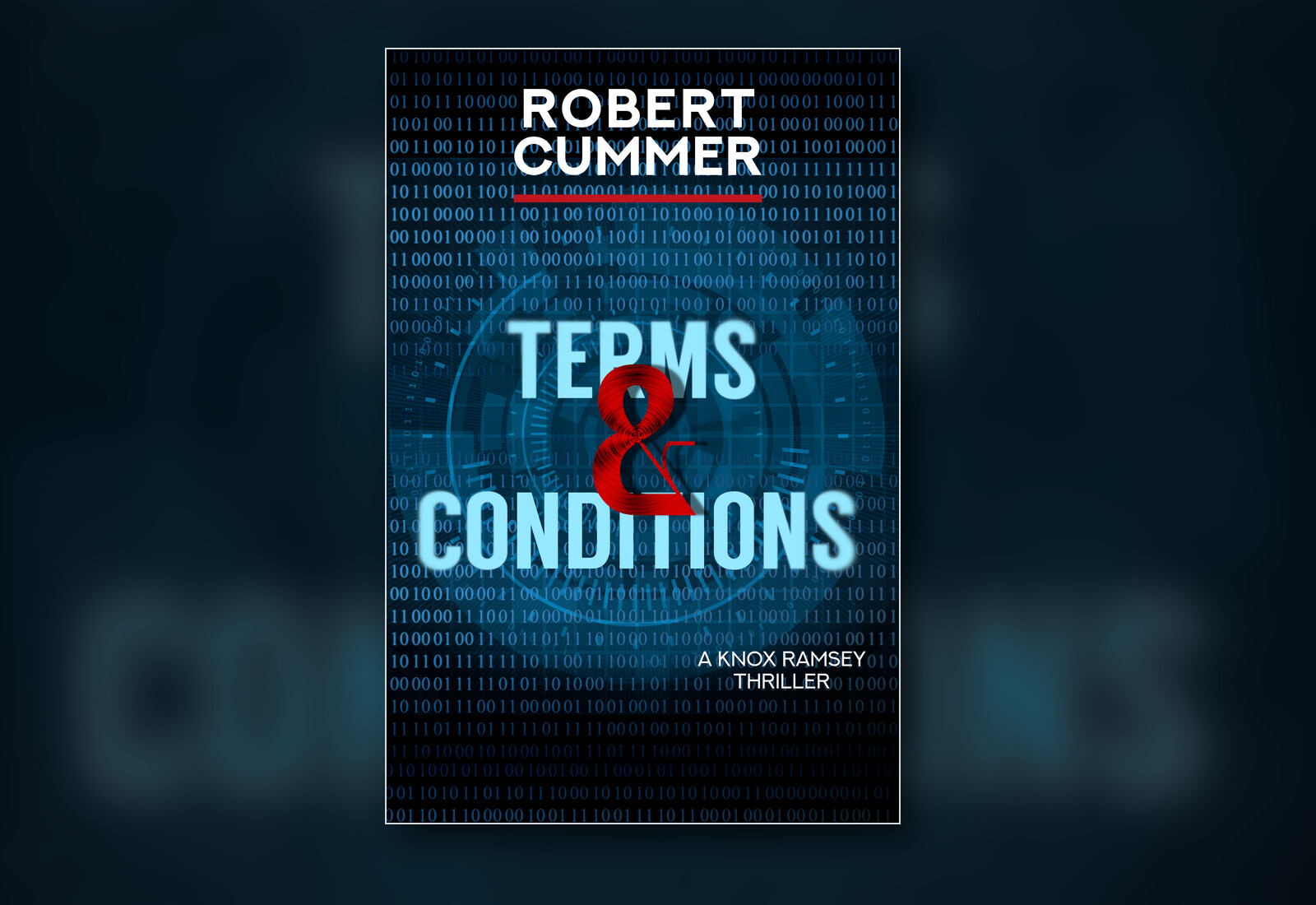
Now that my pulse is somewhere near normal, I can talk about the other thing that has been exhausting and consuming me: Terms & Conditions.
I am aiming to publish it around Halloween, perhaps shortly afterward. It is the second novel in the Knox Ramsey series, following Dark Recipe, which I published on December 20, 2025. I would like to have the new book available before the November elections because its subject matter is topical. But I am not going to damage the book just to force a date. The final production work still has to be done correctly.
Publishing the first book taught me about the mechanics of independent publishing. Writing and revising the second one forced me to look much more closely at how I actually write.
One lesson is clear: I need other people to review and edit my work. I can revise my own writing, but I am too close to it to see everything. The harder part was getting past the fear that someone would read the manuscript and decide I had no idea what I was doing.
It reminded me of software peer review.
Having someone review your code can make you nervous because they are not just examining the finished product. They are looking at how your mind works. They see your assumptions, your shortcuts, the parts you thought were clear, and the vulnerabilities you missed. A good editor does much the same thing with a manuscript.
That can test your sensitivities. It can also make the work substantially better.
After my heart surgery, I became more accepting of a basic fact: some people are going to like you and some are not. The same is true of writing. I cannot control whether every reader likes the story or my voice.
I can control whether I take the work seriously.
I do not want to publish something careless. I do not want to embarrass myself or my family with the quality of something carrying my name. That may sound severe, but it is honest. I had something to say, and I wanted to do more than write for the sake of writing.
I am influenced by writers I respect. Every writer is influenced by somebody. I can sometimes hear what I have learned from them in how I structure a scene, build suspense, or use technology inside a story. But influence cannot be the destination. At some point, I have to sound like myself.
I am still learning what that voice sounds like and becoming more comfortable with it.
I have also accepted that I do not write thrillers in the most traditional sense. These probably are not beach-reading books for most people. They are grounded, technical, and sometimes dense because that is how I understand the world. The technology is real because the consequences are real.
Knox Ramsey is not a superhero. He is an everyday man—a generalist with some highly specialized skills. He has experience, confidence, and gaps in what he knows. He is placed in situations he was not prepared for and has to fall back on first principles, trust the people around him, and step up.
I have worked with people like that. I have been in situations like that.
Terms & Conditions deals with privacy, consent, and what we surrender when we click “I Accept” without understanding what happens next. The investigation draws Knox into covert work in Flint and into a larger struggle involving smart devices, critical minerals, domestic manufacturing, political influence, and foreign intelligence.
I did not want the antagonists to be two-dimensional cartoon characters. The Chinese state actors have motives that make sense through their own strategic lens. The domestic actors have motives too—money, access, influence, and self-preservation. People can lose their principles in pursuit of those things, or perhaps they never had the principles in the first place.
The foreign adversary is not the only threat.
Flint also matters to this book. I was born there and grew up in the area. I did not want to use the city merely as shorthand for decline. Flint helped build the American middle class, and it remains a real place populated by people who are still living, working, and building something.
I hear the standard advice from commercially successful and traditionally published writers: write every day, keep producing, and keep going. It is not bad advice, but I cannot follow it as though persistence guarantees a commercial career. It does not. I have to be pragmatic and avoid fooling myself about the odds.
At the same time, why not me?
Being realistic does not require ruling myself out. I would love for these books to find a large audience and become commercially successful. I am not going to pretend otherwise. If that opportunity comes, I want to accept it—and I want the work to be good enough that I am ready for it.
But commercial success cannot be the only reason I write. Much of this is for me: saying something I believe is worth saying, testing myself, finishing difficult work, and becoming better at it. Whether the audience is large or small, anyone who reads the book is giving me something valuable—their time—and deserves the best version I can produce.
The expectations need to be honest, and the reasons need to be right. Do the work without assuming the world owes you an audience. But do not decide in advance that the audience will never come.
Finishing it will also mean something to me personally.
I think about my children and especially my grandchildren. Someday, I hope one of them can hold the book and say, “My papa did this.” Not because I expect them to think I was famous or extraordinary, but because I finished something difficult and put my name on it.
Maybe that becomes permission for them to try something they are not sure they can do.
If Papa could do it, so can I.
Use the talents you have. Step outside your comfort zone. Keep working when you are not yet convinced you belong there. Then finish the work.
That is what I am trying to do.
Share